Wild Mushroom Conserve
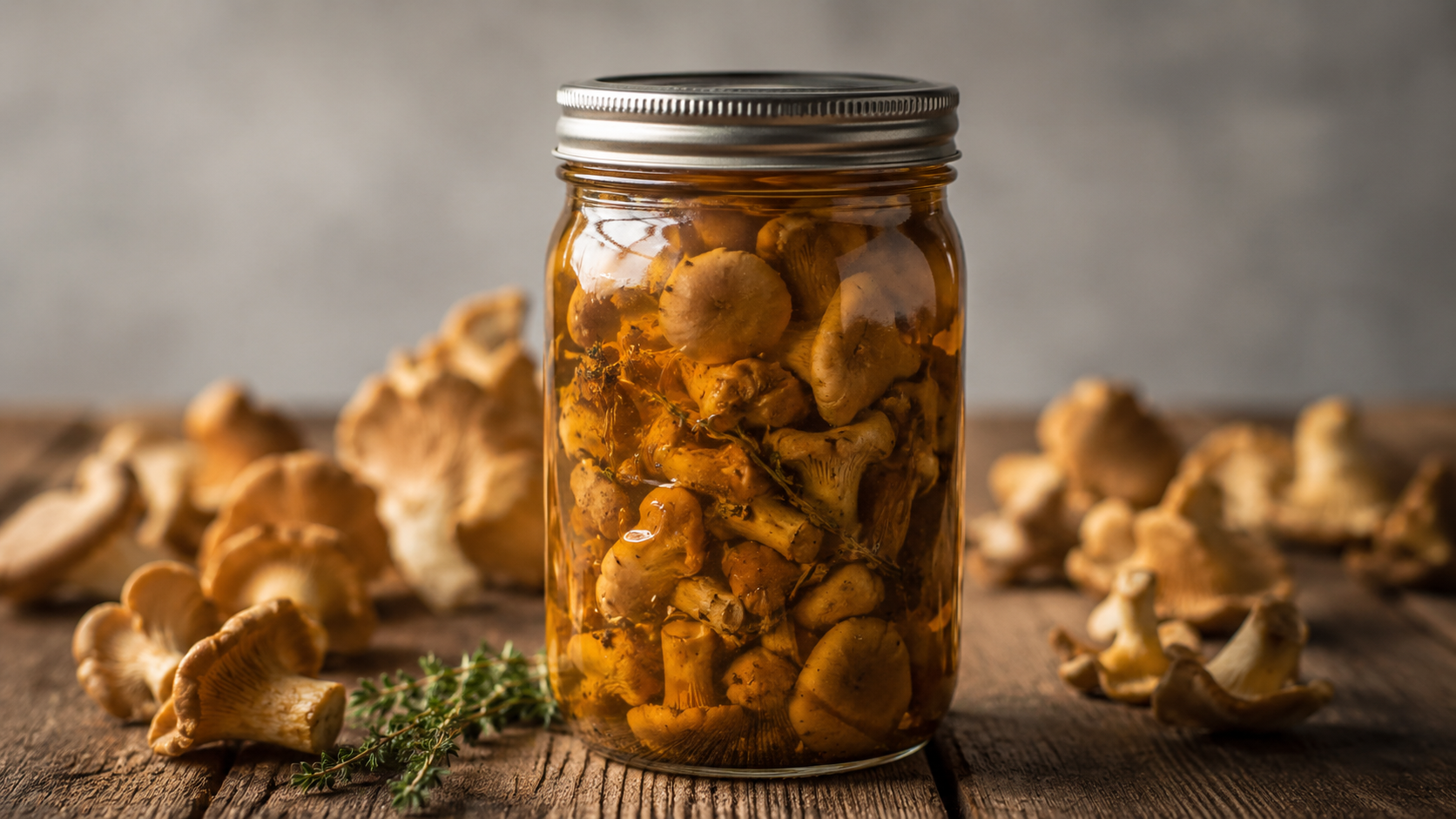
The best wild-mushroom pickle you'll ever taste, full stop. The trick is taking your time on the garlic — really pushing it to a deep golden colour before the mushrooms hit the pan — and using small, young buttons that pickle cleanly without going slimy. Chanterelle buttons are ideal; yellowfoot chanterelles work just as well. Process for the shelf, or simply pack hot and keep in the fridge for months.
* After Alan Bergo, the Forager Chef.
The method
Read the recipe through once before starting — once the brine boils, it moves fast. Two things matter most: drying the mushrooms before cooking so they have room to give up liquid in the pan, and slow-cooking the garlic to a deep golden colour, which carries the flavour of the whole jar.
Clean and dry the mushrooms
Quickly swish the mushroom buttons in cold water to clean them — this ensures they have surface moisture to give up when they hit the heat. Transfer to a tray lined with paper towel and let them rest and release liquid. Overnight in the fridge is ideal; even an hour at room temperature helps. They should look slightly drier and dimpled before they go in the pan.
10 minutesSlow-brown the garlic in oil
In a wide, high-sided pan or a soup pot, heat the oil and sliced garlic together over medium. Take your time — the deeper the gold on that garlic, the better the finished jar tastes. Just don't push it to burnt; brown to deep amber and stop. This usually takes 4–6 minutes.
6 minutesWilt the mushrooms
When the garlic is perfectly golden, add the mushroom buttons, salt, chopped thyme, and bay leaf. Stir so the salt can pull moisture out of the mushrooms, then cover and cook on medium. The released liquid will stop the garlic cooking further and the mushrooms will wilt and give up a good amount of water — about 5–7 minutes.
7 minutesBoil with water and vinegar
Pour in the water and vinegar, raise the heat, and bring everything to a rolling boil. The aroma will turn sharply pickle-like — that's the right moment to move to the jar.
4 minutesPack the jar — and seal or process
Lift the mushrooms out and pack them firmly into a sterilized quart jar. Bring the remaining liquid back to a rolling boil and pour it over the mushrooms. Wiggle a chopstick around the inside of the jar to release air pockets, topping up with more brine as needed so the mushrooms stay fully submerged. From here: either store in the fridge (lasts months under brine), or for shelf storage, leave ½ inch of headspace, top with a thin layer of oil if any mushroom threatens to bob up, seal tight, and water-bath process — 10 minutes for pints, 15 for quarts.
6 minutes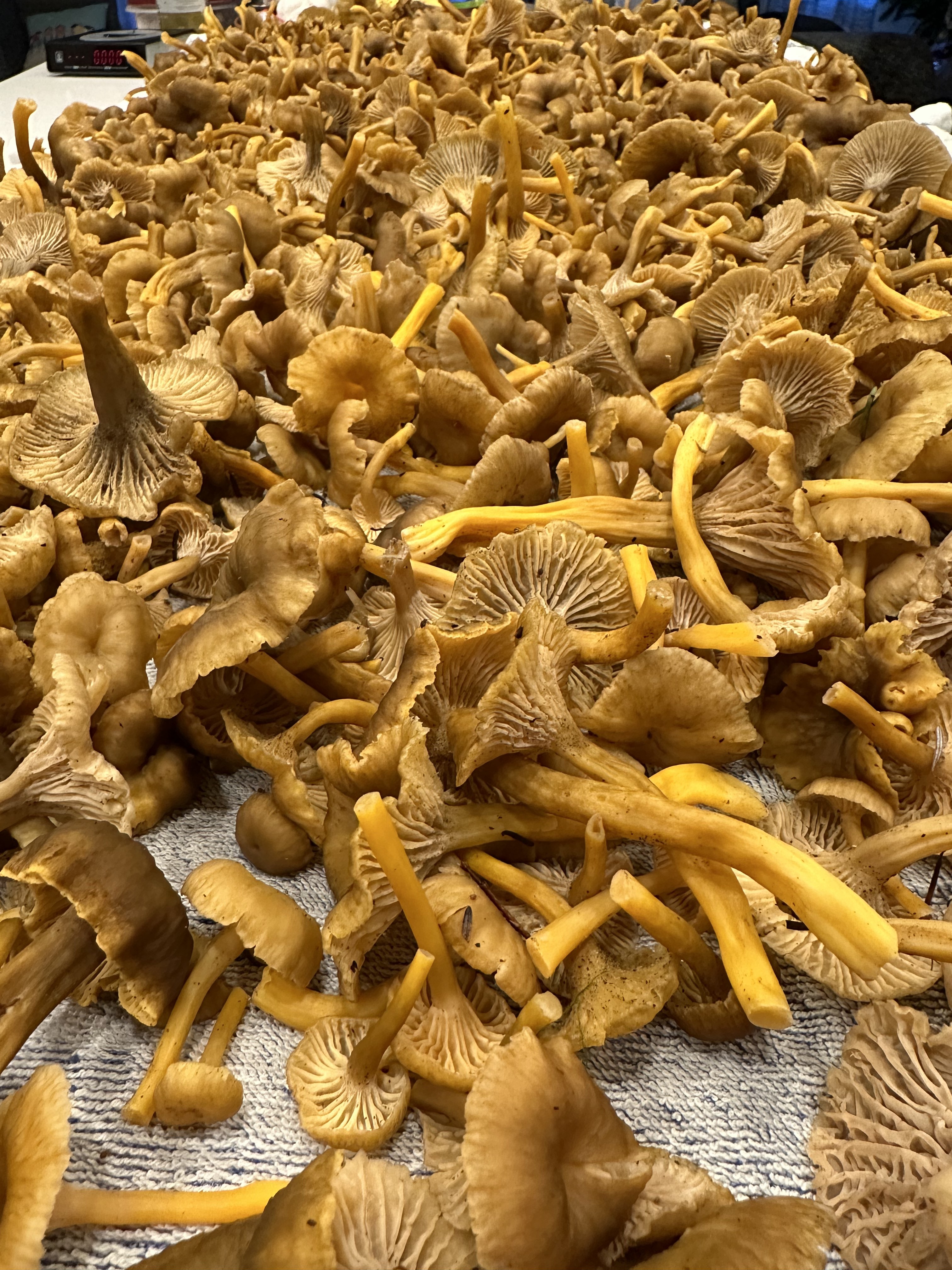
About the Chanterelle
Chanterelles are the prized wild mushroom of fall — golden, trumpet-shaped, with a subtle apricot scent and a firm, almost crunchy bite when small. Yellowfoot chanterelles (Craterellus tubaeformis) are the wetter, later cousin: smaller, with hollow yellow stems and brown caps. Both pickle beautifully because their texture stays intact under brine and their flavour deepens with age in the jar. Always identify chanterelles with confidence before foraging — they have a few lookalikes worth knowing.
More on our mushroomsNotes & tips
Yellowfoot is the easy stand-in
If you can't get small chanterelle buttons, yellowfoot chanterelles (Craterellus tubaeformis) pickle just as well — they're smaller, slightly more delicate, and abundant later in the fall when the regular chanterelles are done. The brine and method don't change.
Shelf-stable, two ways
Two paths to long storage: water-bath process the sealed jar (10 min for pints, 15 for quarts) like cucumber pickles. Or use the inversion method — pour the boiling-hot mushrooms and brine into the jar, top with about ¼ cup more oil, screw the lid on tight, and turn the jar upside down to seal as it cools. Either way, once opened, store in the fridge.
Where this jar earns its keep
Cheese board (next to hard cheeses and salumi). Stirred into a vinaigrette for grain bowls. Chopped onto pizza after baking. Tucked into focaccia sandwiches. Pulled out of the brine and seared briefly to wake them up before serving — the flavour you put in the jar will return in concentrated form.