Hearty Beef and Mixed Mushroom Stew
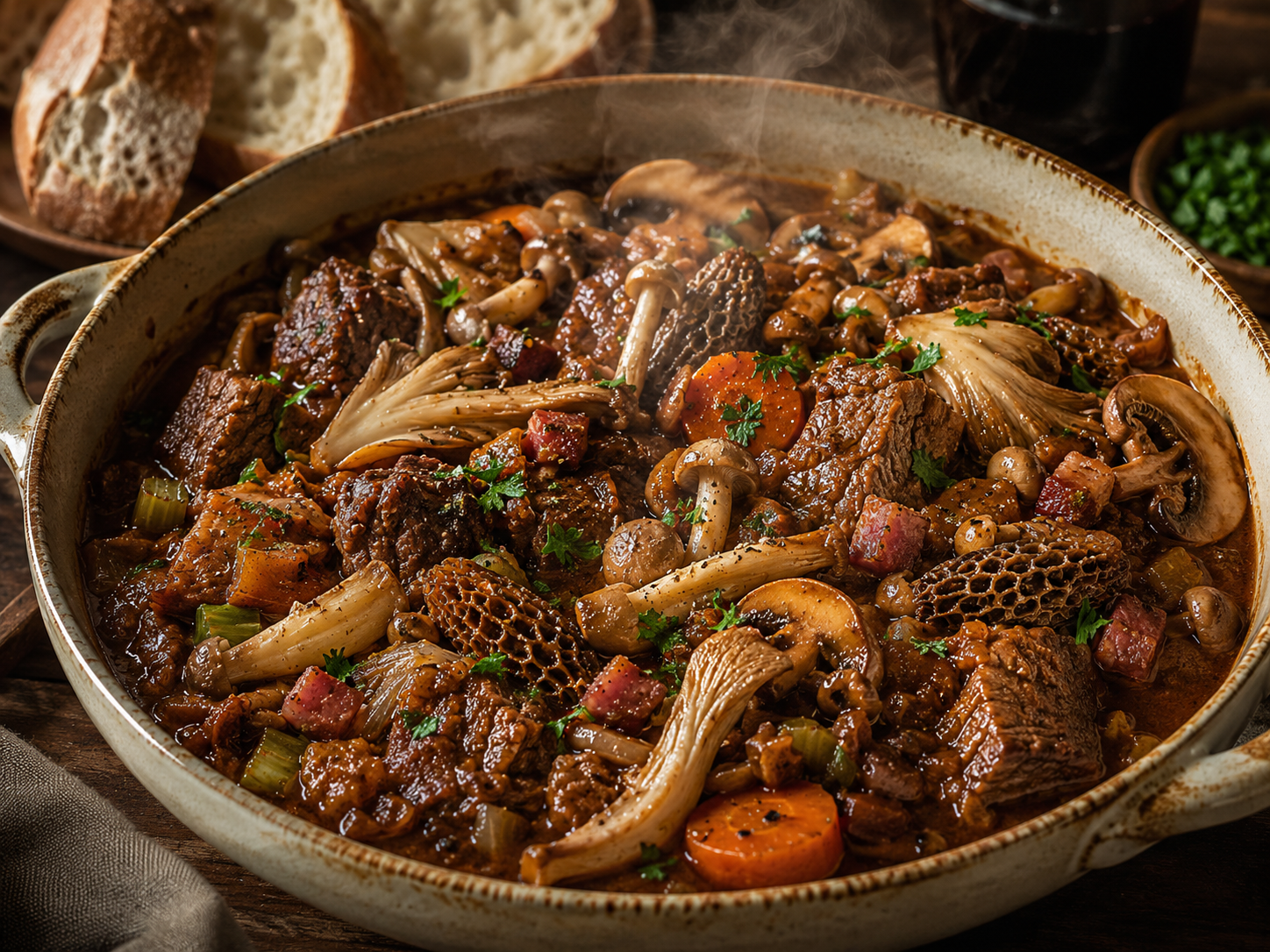
What turns a perfectly good beef stew into something a little extraordinary is the mushroom blend. Each variety pulls its own weight: oysters add soft umami body, pioppino holds its firm bite, chestnut deepens the nut-and-earth backbone, and a handful of morels does the honeycomb thing — drinking up sauce and releasing it in every spoonful. Tomato paste–thickened, pancetta-rich, ready in about an hour.
* Italian-style. Use a low-salt broth and salt at the end — broths vary wildly.
The method
One pan, two phases. First a hard brown on the beef and pancetta to build the foundation, then a long quiet simmer with tomato paste and broth where the mushroom mix does the rest. Don't oversalt — you can always add at the end.
Sweat the aromatics
In a large frying pan or shallow Dutch oven, heat the olive oil over medium. Add the garlic, celery, and onion and cook 1–2 minutes until softened and fragrant — don't let them colour.
3 minutesBrown the beef, add pancetta and wine
Add the beef and brown for 2–3 minutes, turning so the pieces colour on all sides. Tip in the pancetta, raise the heat to high, and pour in the wine. Cook about 2 minutes until the alcohol fumes have cooked off and the wine has reduced down.
5 minutesBuild the sauce — simmer 20 minutes
Stir in the tomato paste, ½ cup of the broth to start, salt, pepper, and oregano. Gently combine, then drop the heat to low and let it cook quietly for about 20 minutes — the beef will start tenderizing and the sauce will deepen in colour.
20 minutesAdd carrots and the mushroom mix — cook 30 more
Add the sliced carrots, oyster, pioppino, and chestnut mushrooms first — they need the full 30 minutes. Hold the morels back for the last 10 minutes — slice them large, or at minimum halve them lengthwise so any hidden grit or insects can be checked and the honeycomb caps fill with sauce rather than turning to mush. Stir occasionally; add more broth a splash at a time if the sauce tightens too far. You want a thick sauce, not gravy.
30 minutesTaste, finish, serve
Taste the sauce and add salt if it needs it (your broth's saltiness will determine how much). Scatter over the minced parsley and serve hot — with crusty bread, over polenta, or on its own.
2 minutes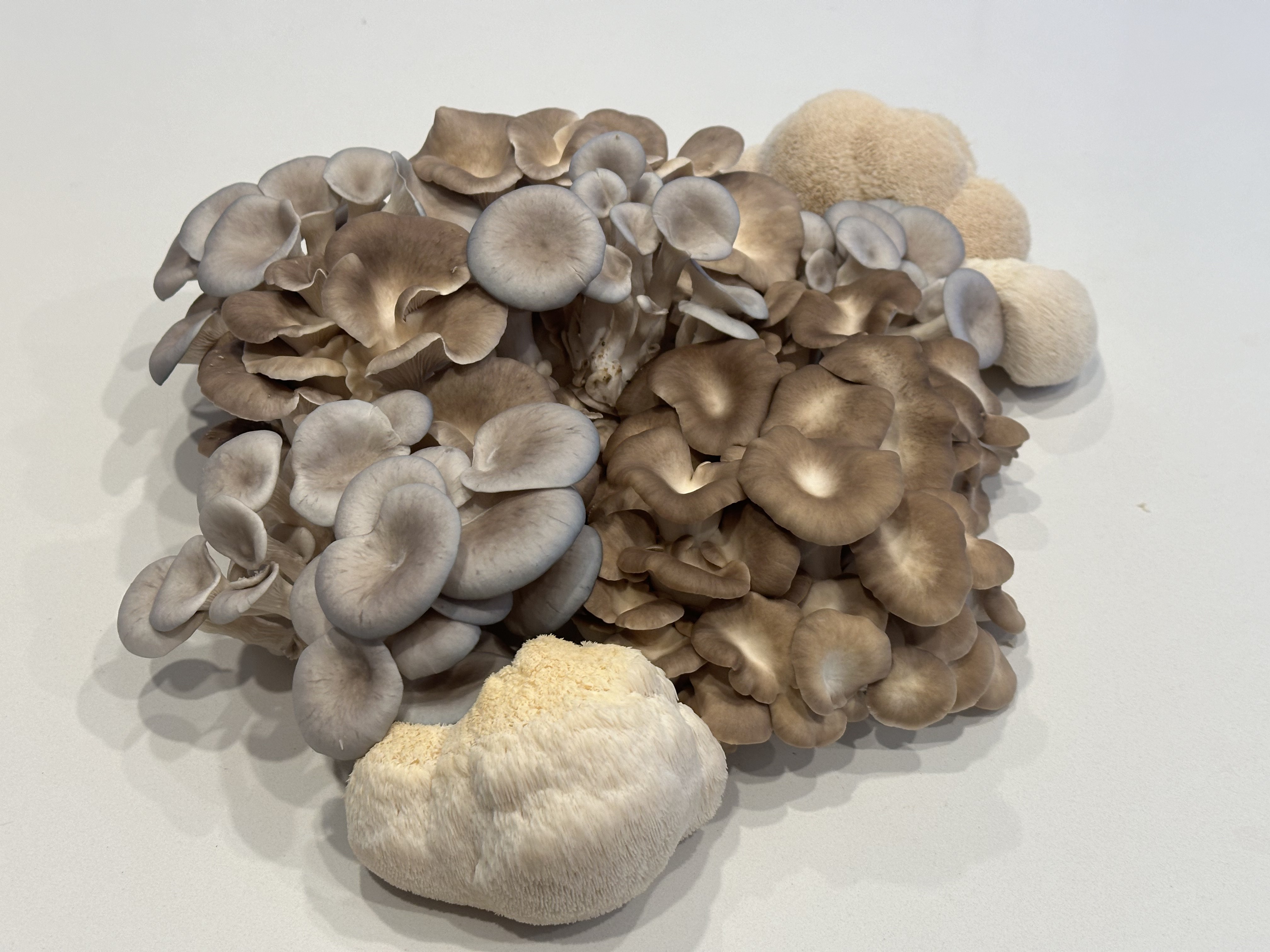
About the Mixed
Each variety does a different job here. Oyster mushrooms add soft umami body and soak up the sauce; pioppino hold their firm bite and contribute that wild-mushroom note; chestnut mushrooms (Pholiota) deepen the earthy backbone and want a long cook anyway; morels — when they're in season — bring the honeycomb caps that catch sauce and release it in bursts. The result is a stew where no two spoonfuls taste exactly the same.
More on our mushroomsNotes & tips
Salt at the end, not the beginning
Store-bought broths vary wildly in saltiness. Add only the bare minimum salt at the start (or none if your broth is salted) — taste at the end and adjust. It's easier to add salt than to take it away.
Start dry, thin as you go
Begin with just ½ cup of broth and let the sauce reduce and thicken. Adding too much broth up front means a long extra simmer to tighten it — which leaves the carrots and mushrooms overcooked and mushy. You can always loosen the sauce at the end with a splash more broth.
Dried morels are a secret weapon
Fresh morels are seasonal and often foraged, but dried morels work beautifully here — sometimes better. Cover about ½ oz of dried morels with 1 cup of just-boiled water and let them rehydrate for 20–30 minutes, then lift them out and squeeze gently. The real prize is the soaking liquid: strain it through a coffee filter or paper towel (to catch grit) and substitute it for the vegetable broth in the recipe. That liquid is the deepest, most concentrated mushroom flavour you can put in a pot. No morels at all? Sub the other three cultivated mushrooms up to 3½ cups total, or add hen of the woods (maitake) for similar wild-mushroom depth.